UI/UX & Desktop
Noesis Studio
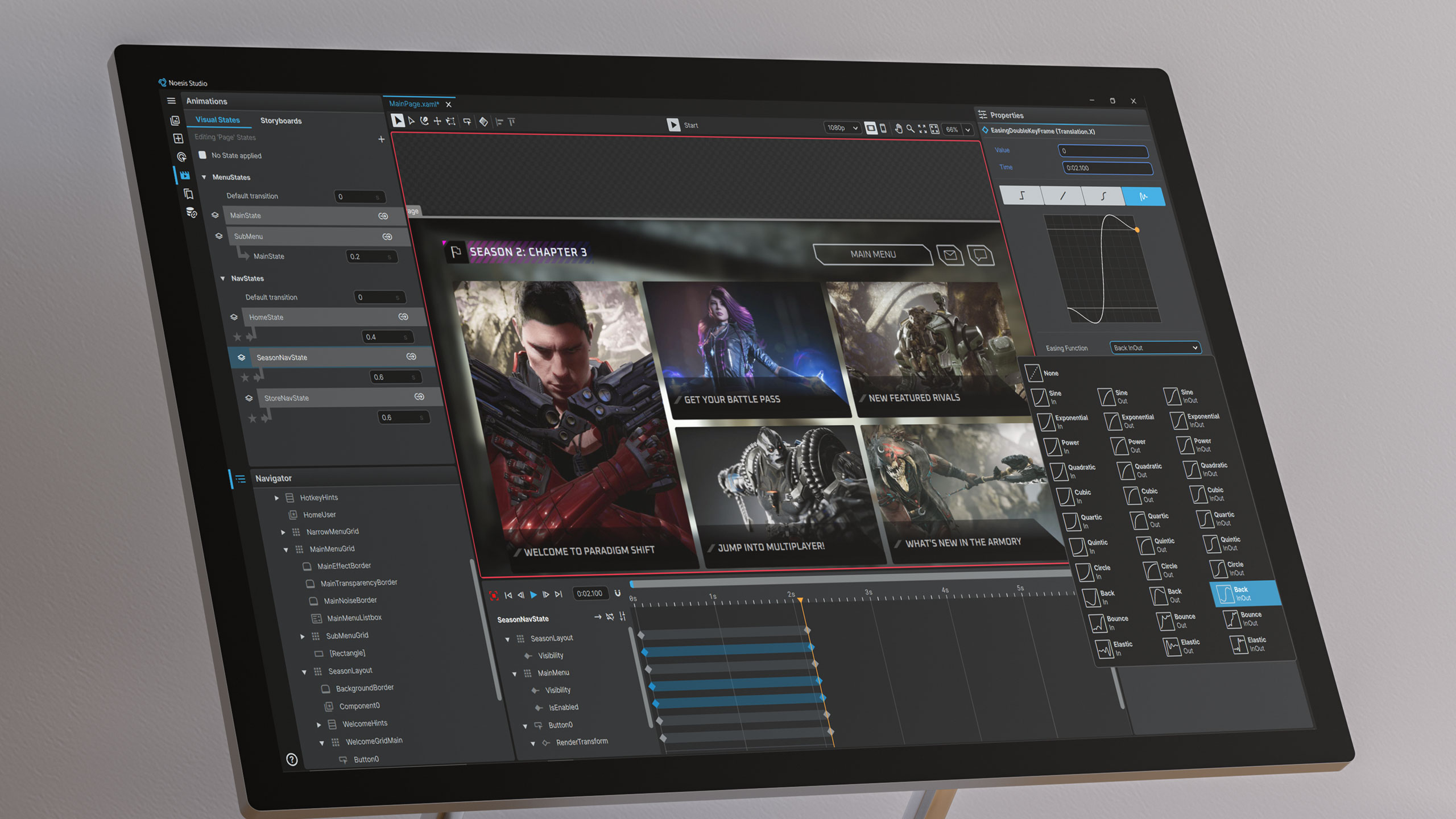
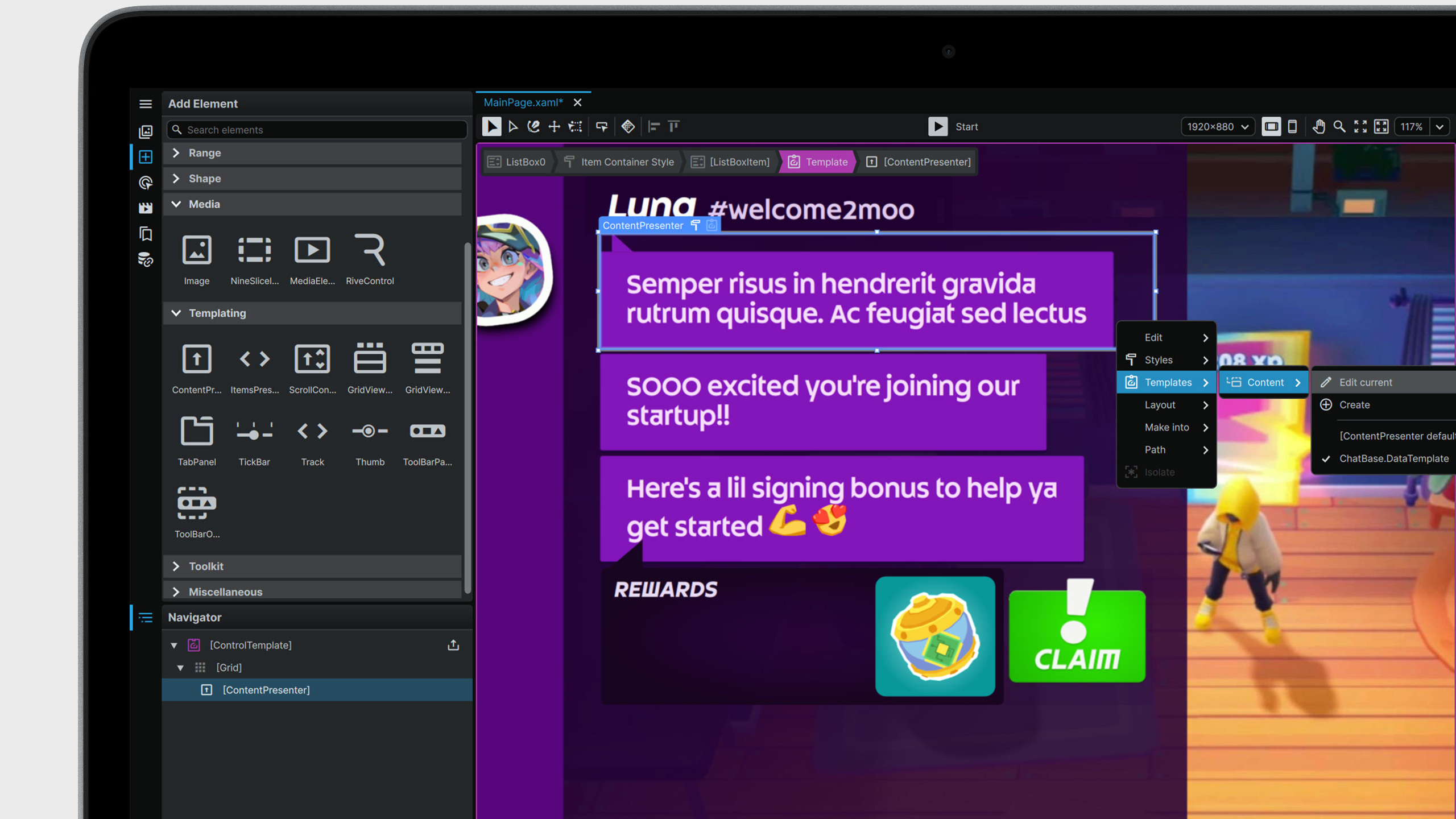
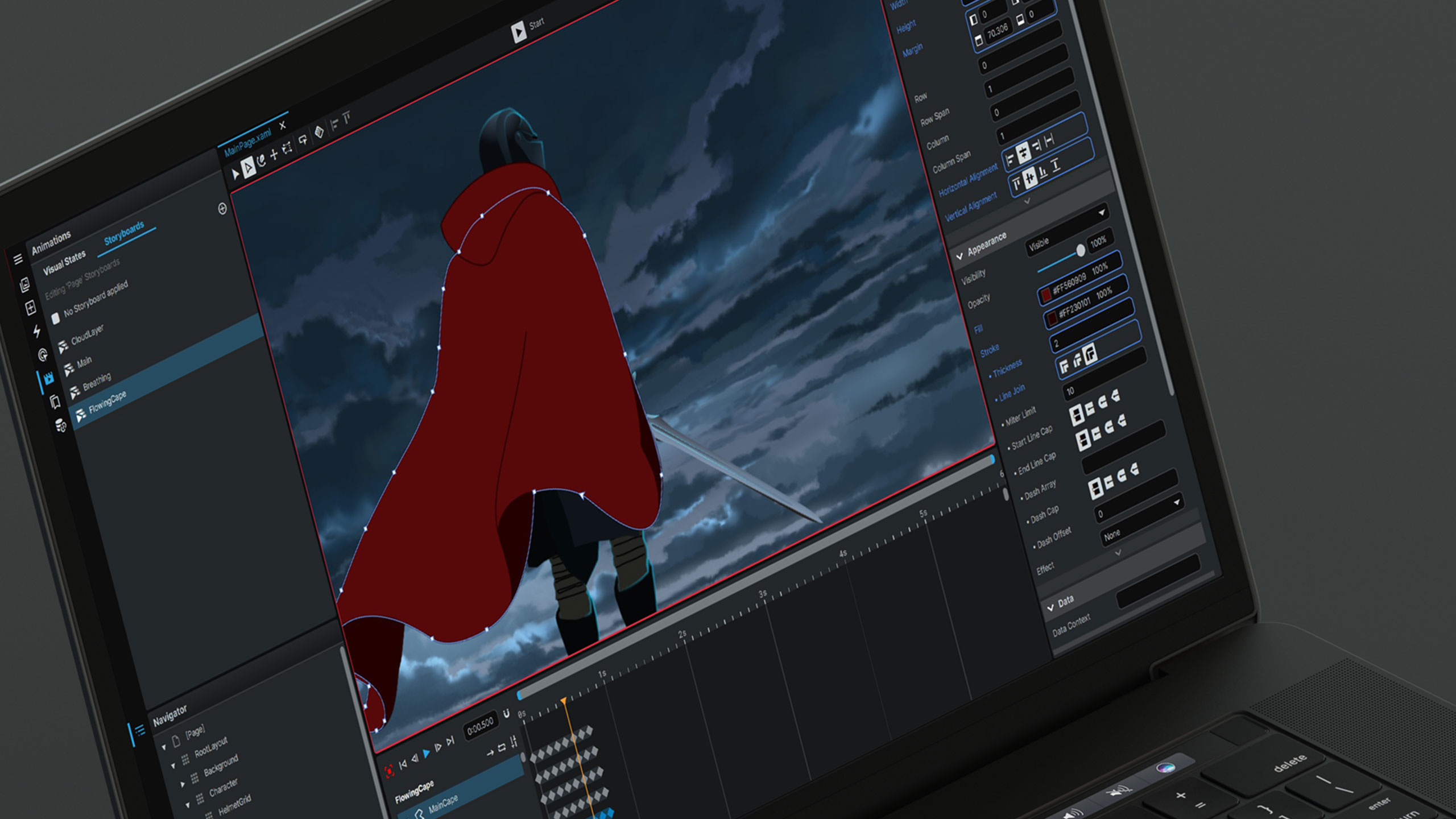
Noesis Studio
Project overview
Noesis Studio is a next-gen game UI editor that’s currently in Beta state. Based of the widely used middleware framework, it’s being adopted by leading AAA companies such as GOTY winner Larian Studios (Baldur’s Gate 3), Blizzard, Meta, Crystal Dynamics, Gameloft, etc.
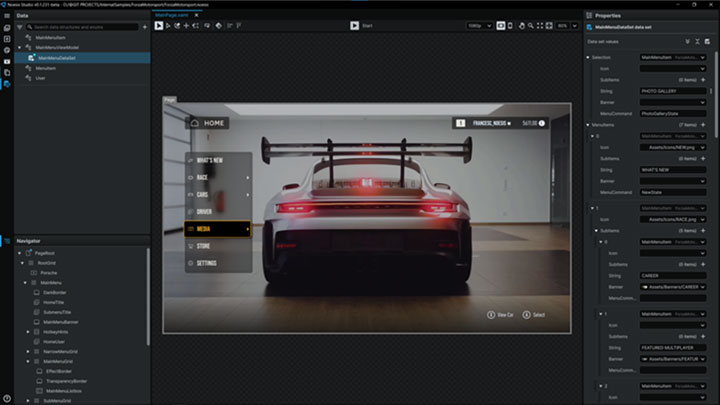
My role
As the UX lead for the Studio, I researched and tested user flows, gathered findings and insights and proposed solutions, presented in a variety of static mockups and interactive prototypes.
Also as a UI designer, I created the theme for the Studio with all the necessary components, icons and cursors, amounting to more than 400 elements.
UX research
When I got involved with the project, the product scope and features were already set and there was a user base provided by the popular Noesis GUI framework, a take on Microsoft’s WPF aimed at the games’s industry.
My first step, to fully understand the problem-space, was to learn the Xaml-based framework, then I ended creating some demo samples with it.
To understand user frustration, needs and requirements, I conducted research through usability tests and interviews. My goal was to gain insights into the needs and wants of the users.
With all that information, I created user flows and tests for them. With the results of the tests, the entire team proposed solutions to overcome the pain points.
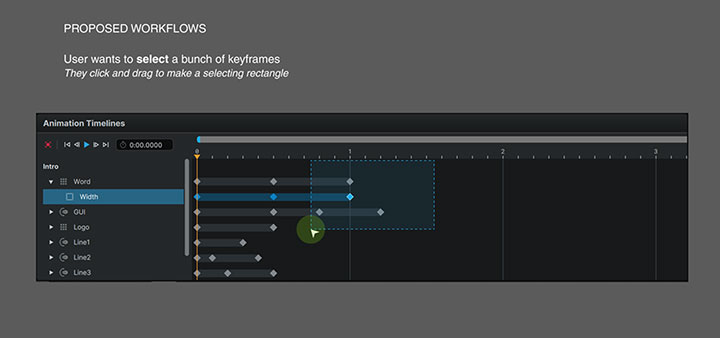
Design & prototyping
Focusing on the solutions proposed during user flow research, I sketched out the first wireframes using pen and paper.
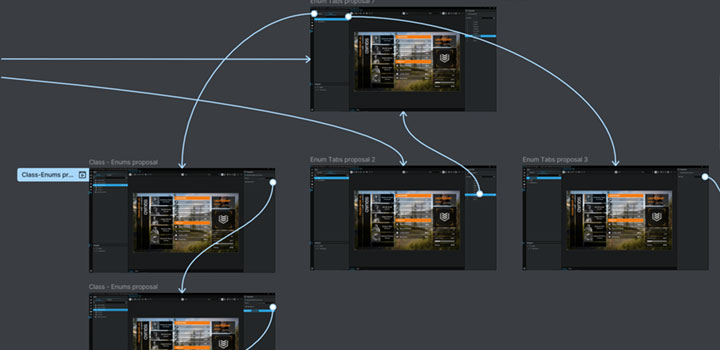
Then I used Figma to create the digital ones. I created a low-fidelity prototype from the user flow diagram and wireframes to test functionality before incorporating it into the final design and to ensure accessibility for end-users.
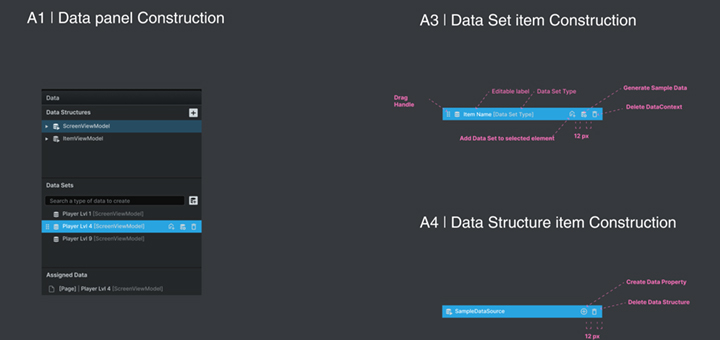
Also on the design side, I created a component library with its color scheme and font selection.
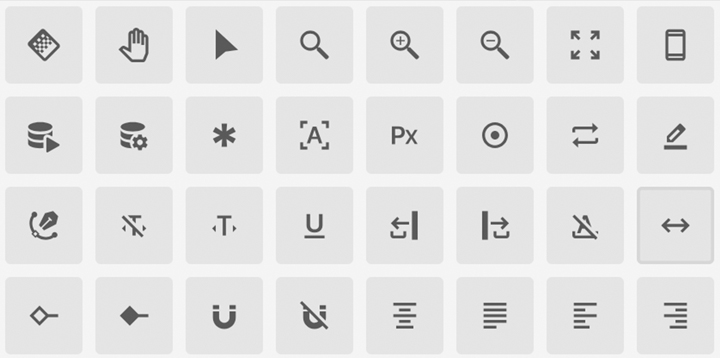
To convey the meaning of the sometimes very abstract elements used as building blocks of the Studio, I sketched and iterated on hundreds of designs, grouping them into ready-to-use icon fonts.
Usability testing
With each iteration, I designed qualitative usability tests and conducted moderated and unmoderated testing, with a selection of users representing the main user personas.
All these hundreds of hours of testing were recorded and analyzed, and served to verify our solutions or discover new problems, which were summarized and addressed in the following Design Thinking processes.
Current state and takeaways
As I’m writing this, the Studio is in Beta and it’s been eagerly adopted by the target users and key industry companies. Some of them have voiced their praise for the Studio’s UX:
Clean, thoughtful, organized design.
Some of the arrangement of various sections and panels just makes a lot more sense, or it maps better to the way my designer brain thinks.
Less of xaml’s raw functionality is obscured or buried, and instead it’s been tabbed apart, or coupled into panels you’d more naturally expect.
What I learned
I learned that it’s very hard to do a Design Thinking process when the rest of the team are reluctant to that approach and prefer a more straightforward one. I tried to do some evangelization with mixed success.
On the other part, I learned a lot of interesting topics and practices of the Games Industry, and specifically of the art and craft of Game UI design.
Visit website